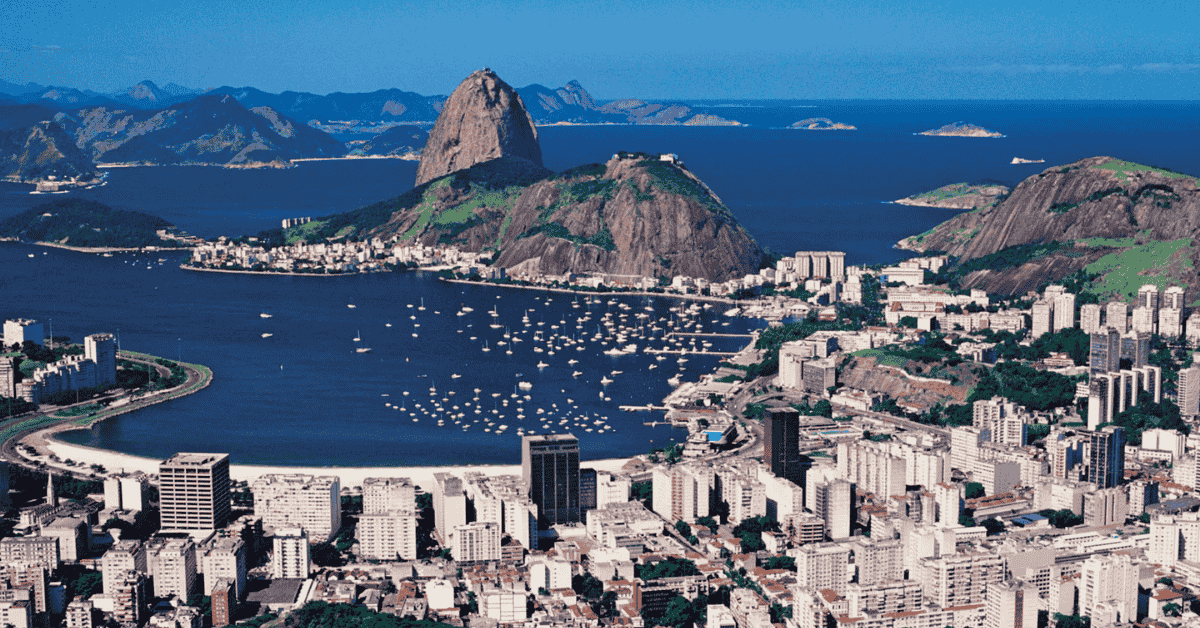
Let me tell you something that completely blew my mind during my travels. When I first looked at a Brazil South America map and saw how massive this country is, I had no idea just how deep and fascinating the history of Brazil would turn out to be.
Is Brazil a country? Yes, and it’s not just any country. It’s the largest nation in South America, and its story is one of the most unique in the entire Western Hemisphere.
I remember sitting in a café in Salvador, talking with a local historian who shared stories that made me realize Brazil’s past is nothing like what I expected. The history from Brazil isn’t just about dates and events. It’s about cultures colliding, empires rising and falling, and a nation that took a completely different path than its neighbors.
Let me take you on this incredible journey through Brazil country history, just as I experienced it.
Ancient Roots: Before the Portuguese Arrived
The history of Brazil starts way before any European ever set foot on its shores. When I visited the Amazon region, I learned something incredible. Indigenous peoples had been living on these lands for thousands of years, possibly as far back as 60,000 years ago.
Before 1500, somewhere between 2 to 5 million indigenous people called this territory home. They weren’t just scattered tribes wandering around. These were organized societies with their own languages, traditions, and ways of life.
The Tupian people lived along the coast. The Guaraní populated central and southern regions. There were the Potiguara, the Tupinambá, and hundreds of other groups, each with their own unique culture.
What surprised me most was learning about recent archaeological discoveries in the Amazon. Scientists found evidence of large, organized settlements, fortified cities, and advanced agricultural systems. These weren’t simple hunter-gatherer societies. Some indigenous groups had sophisticated knowledge of land management and community planning.
Walking through museums in Brazil, I saw pottery, tools, and artifacts that revealed a rich tapestry of life before colonization. These civilizations left their mark on Brazil in ways that still influence the country today.
The Portuguese Arrival: April 22, 1500
The moment that changed everything happened on April 22, 1500. Portuguese explorer Pedro Álvares Cabral, on his way to India, accidentally landed on Brazil’s northeastern coast near what’s now Porto Seguro.
I actually visited Porto Seguro, and standing on that beach, imagining that first encounter between two completely different worlds, gave me chills.
Cabral claimed the land for Portugal. At first, they called it “Land of the True Cross,” but it quickly became known as Brazil because of the brazilwood trees. These trees produced a valuable red dye that Europeans wanted badly.
The Treaty of Tordesillas from 1494 had already divided the New World between Spain and Portugal, and Brazil fell on Portugal’s side of the line. This is why Brazil speaks Portuguese today while most of South America speaks Spanish.
What’s interesting is that Portugal didn’t immediately rush to develop Brazil. They were more focused on their profitable Asian trade routes. For the first few decades, Brazil was almost ignored, allowing French traders to sneak in and take brazilwood for themselves.
Colonial Brazil: Building an Empire
Things changed dramatically in the 1530s when Portugal decided to actually colonize Brazil. King John III divided the territory into 15 hereditary captaincies, basically giving chunks of land to nobles and merchants to develop.
The colonial period of Brazil history lasted from 1500 to 1822. During this time, the economy went through different cycles. First came the brazilwood extraction, which gave the country its name. Then sugar production became huge, especially in the northeast.
When I visited the old sugar plantations in Bahia, I could still feel the weight of this history. The grand plantation houses, the slave quarters, the processing buildings, they all tell a story of wealth built on exploitation.
In the late 1600s, gold and diamonds were discovered in what became known as Minas Gerais, meaning “General Mines.” This sparked a gold rush that transformed Brazil. Towns like Ouro Preto sprang up almost overnight, becoming some of the largest cities in the Americas.
Walking through Ouro Preto today, with its baroque churches and colonial architecture, you can see how wealthy this region became. The gold from Brazil funded monuments in Portugal and made the Portuguese crown incredibly rich.
The Dark Chapter: Slavery
I can’t talk about the history of Brazil without addressing slavery, because it shaped this country profoundly. When I visited Salvador, the heart of Afro-Brazilian culture, I learned that Brazil received more enslaved Africans than any other country in the Americas.
Indigenous people were initially enslaved to cut brazilwood and work on plantations, but European diseases devastated their populations. Starting in the late 1500s, massive numbers of enslaved Africans were brought to Brazil to work on sugar plantations and in the gold mines.
Slavery in Brazil lasted over 300 years, officially ending only in 1888. Brazil was actually the last country in the Western Hemisphere to abolish slavery.
But here’s something powerful I discovered. The African influence didn’t just leave scars, it became woven into Brazil’s cultural DNA. The music, the food, the religion, the dance. Everywhere you go in Brazil, especially in Bahia, you feel this rich African heritage alive and thriving.
Independence: A Unique Path
Here’s where Brazil’s history gets really different from other South American countries. In 1808, something incredible happened. Napoleon invaded Portugal, and the Portuguese royal family actually fled to Brazil, making Rio de Janeiro the capital of the Portuguese Empire.
Think about that. Brazil wasn’t just a colony anymore. It became the center of an entire empire. When I walked through the old imperial palaces in Rio, I imagined what it must have been like when kings ruled from these buildings.
King João VI returned to Portugal in 1821, leaving his son Pedro as regent. The Portuguese parliament tried to reduce Brazil back to colonial status and ordered Pedro to return to Europe. But Pedro refused.
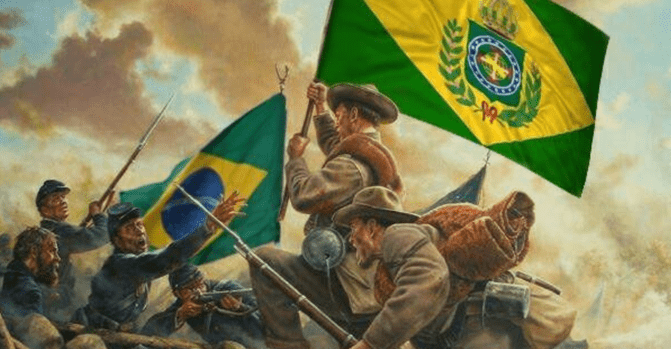
On September 7, 1822, on the plain of Ipiranga near São Paulo, Pedro declared Brazil’s independence with the famous “Cry of Ipiranga.” He became Emperor Pedro I, making Brazil the only South American nation to become an independent empire rather than a republic.
The Brazilian Empire: 1822 to 1889
The Empire of Brazil lasted 67 years, making it one of only three monarchies in the Americas. This period is fascinating because unlike most of Latin America, which went through chaos and civil wars after independence, Brazil remained relatively stable.
Pedro I ruled until 1831, when he abdicated in favor of his five-year-old son, Pedro II. After years of regency, Pedro II took full power and ruled for 58 years, making him one of the longest-reigning monarchs anywhere.
Walking through the Imperial Museum in Petrópolis, I learned that Pedro II was actually beloved by his people. He promoted education, built railroads, encouraged European immigration, and modernized Brazil’s economy. The country grew tremendously under his rule.
But there were also wars. Brazil fought in the Cisplatine War, losing what became Uruguay. Later came the devastating Paraguayan War from 1864 to 1870, the bloodiest conflict in South American history.
The empire’s end came suddenly. In 1888, Princess Isabel abolished slavery while her father was in Europe. This angered wealthy plantation owners who depended on slave labor. Combined with growing republican sentiment and military dissatisfaction, the empire fell.
The Republic and Beyond
On November 15, 1889, a military coup overthrew Emperor Pedro II, who was actually at the height of his popularity. He didn’t resist. Brazil became a republic, modeling its constitution after the United States.
The First Republic, also called the “Old Republic,” lasted from 1889 to 1930. This period was dominated by coffee plantation owners and was nicknamed the “Café com Leite” (coffee with milk) republic because power alternated between São Paulo and Minas Gerais.
The Great Depression in 1929 shattered Brazil’s coffee-based economy, leading to the Revolution of 1930 and the rise of Getúlio Vargas. Brazil then went through periods of democracy, dictatorship, and gradual modernization throughout the 20th century.
It wasn’t until 1988 that Brazil adopted its current constitution and became the democratic federal republic it is today.
What This History Means for Travelers
Understanding the history of Brazil completely transformed how I experienced the country. When I walked through the colonial streets of Olinda, attended a Candomblé ceremony in Salvador, or visited the modern architecture of Brasília, I saw layers of history everywhere.
The indigenous heritage, the Portuguese colonial influence, the African diaspora, the waves of European and Asian immigration, they all combined to create this incredibly diverse, vibrant nation.
Yes, Brazil is a country with a complex and sometimes painful past. But it’s also a country that emerged from this history with an identity unlike anywhere else in the world.
When you look at a Brazil South America map, you’re not just seeing the largest country on the continent. You’re seeing a place where cultures merged, where an empire once ruled, where millions of people from different backgrounds created something entirely new.
The history from Brazil teaches us about resilience, cultural fusion, and the ongoing struggle to build a more just and equal society. It’s a story that’s still being written, and visiting Brazil means becoming part of that continuing narrative.
Every time I return to Brazil, I discover new layers of this incredible history, and I’m constantly amazed by how the past shapes the present in this remarkable nation.
Author Note
I write all the content on Tosstrips based on my own travel research, personal experiences, and careful destination planning. I enjoy exploring new places, learning about different cultures, and sharing practical travel ideas that can actually help readers plan better trips. Many times, I use my Random Country Generator on Tosstrips to randomly select my next destination idea and discover places I may not have planned otherwise. You can explore destinations or get travel inspiration by visiting the homepage at https://tosstrips.com/.
If you’d like to know more about me and the story behind Tosstrips, you can visit the author page here: https://tosstrips.com/author/.