
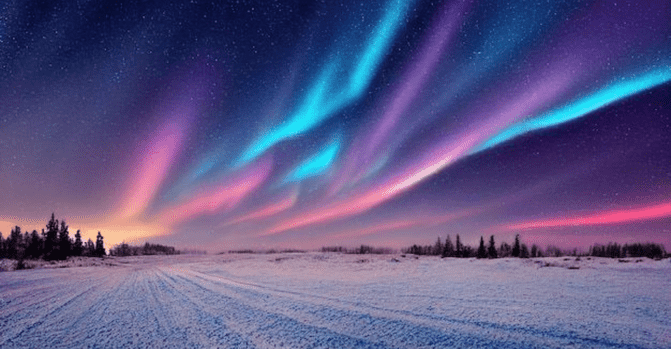
Imagine standing beneath a star-filled sky as ribbons of emerald green light begin dancing overhead, painting the darkness with ethereal colors that seem almost otherworldly.
This is the magic of the Northern Lights in Iceland, one of nature’s most breathtaking spectacles.
If witnessing the Aurora Borealis is on your bucket list, you’re in the right place. Iceland offers some of the world’s best opportunities to see this celestial phenomenon, and with the right preparation, your chances of catching this magnificent display are better than ever.
What Makes Iceland Perfect for Northern Lights Viewing
Iceland sits just below the Arctic Circle, positioning it perfectly within the auroral zone where Northern Lights activity is most intense.
The island nation offers unique advantages for aurora hunters. With a sparse population and minimal light pollution outside urban areas, you can easily find dark viewing spots.
The rugged landscape of glaciers, waterfalls, and volcanic terrain creates stunning foregrounds for photography, making your Northern Lights experience even more memorable.
Plus, Iceland’s compact size means you can reach prime viewing locations quickly, maximizing your chances during short winter trips.
When Can You See the Northern Lights in Iceland
The Northern Lights season in Iceland runs from late August through early April, when nights are sufficiently dark for aurora viewing.
During summer months, Iceland experiences the midnight sun with nearly 24 hours of daylight, making Northern Lights invisible even if they’re present.
The peak viewing window falls between September and March, with the darkest months from November to February offering up to 20 hours of darkness daily.
However, these winter months also bring Iceland’s stormiest weather, which can obstruct views with cloud cover.
September and March strike an ideal balance, providing long dark nights with generally clearer skies and milder weather conditions.
Right now, 2025 and 2026 are particularly exciting years for Northern Lights viewing. The sun is approaching its solar maximum in its 11-year cycle, meaning increased solar activity and more frequent, intense auroral displays.
Best Time of Night to Spot the Lights
You’ll want to head out when the sky is completely dark, typically between 9:00 PM and 2:00 AM.
The aurora often intensifies around midnight when darkness is deepest, though displays can appear anytime during nighttime hours.
Remember that even during winter, some residual light remains near sunset and sunrise. Wait until full darkness settles before expecting optimal viewing conditions.
Patience is essential. The lights might not appear immediately, and displays can last anywhere from a few minutes to several hours depending on solar wind intensity.
Understanding the Northern Lights Forecast
Checking the aurora forecast dramatically improves your chances of a successful sighting.
The Kp-index measures geomagnetic activity on a scale from 0 to 9. A reading of 0 to 2 indicates low activity, though sightings are still possible under clear skies.
Readings of 3 to 4 suggest moderate to active conditions with good viewing prospects, while anything above 5 indicates strong geomagnetic storms and spectacular displays.
In Iceland, even a Kp-index of 1 or 2 can produce visible auroras thanks to the country’s northern location.
Beyond solar activity, cloud cover determines whether you’ll actually see the lights. The Icelandic Meteorological Office provides real-time cloud cover maps showing clear areas in white and cloudy regions in green.
Solar wind speed matters too. When speeds exceed 500 kilometers per second, chances of vibrant, colorful displays increase significantly.
Several reliable resources can help you track conditions. The Icelandic Meteorological Office offers comprehensive aurora forecasts updated daily, while apps like My Aurora Forecast provide real-time predictions and alerts directly to your phone.
Can I See the Northern Lights Tonight
This question depends entirely on current conditions, which change rapidly.
Before heading out, check the aurora forecast for tonight’s predicted activity level and cloud cover in your location.
Even with low predicted activity, clear skies can reveal faint auroras that cameras often capture better than the naked eye.
If conditions look promising, venture away from city lights to dark areas where the aurora will be most visible.
Remember that forecasts provide guidance, not guarantees. Nature operates on its own schedule, and sometimes the aurora surprises everyone.
Where to See Northern Lights in Iceland
While Northern Lights can appear anywhere in Iceland when conditions align, certain locations consistently offer better viewing experiences.
Reykjavik itself occasionally displays auroras during strong activity, but light pollution diminishes the spectacle. For the best views, head outside the capital to darker areas.
Thingvellir National Park, about 40 minutes from Reykjavik, combines UNESCO World Heritage scenery with excellent aurora viewing opportunities.
The Snaefellsnes Peninsula on Iceland’s west coast provides dramatic coastal backdrops with minimal light pollution.
Southern Iceland’s black sand beaches near Vik create stunning contrasts when Northern Lights appear above the waves.
The Jokulsarlon Glacier Lagoon in southeast Iceland offers otherworldly landscapes where icebergs float beneath dancing lights.
Northern Iceland, particularly around Akureyri, sits closer to the Arctic Circle and experiences strong aurora activity with fewer tourists than southern regions.
Wherever you go, seek elevated locations with unobstructed views of the northern horizon, though active displays can fill the entire sky.
Northern Lights Iceland Tours: Should You Book One
Joining a guided Northern Lights tour offers several compelling advantages over hunting independently.
Experienced guides monitor forecasts continuously and know which locations offer the best conditions each night based on cloud cover and activity predictions.
They handle all logistics including transportation, allowing you to relax and enjoy the experience rather than navigating unfamiliar roads in darkness.
Most tours include warm clothing, hot beverages, and photography assistance, plus many offer free rebooking if the lights don’t appear on your first attempt.
Small group tours typically accommodate 7 to 19 people, providing intimate experiences with knowledgeable guides who share insights about aurora science and Icelandic culture.
Tour operators use specialized super jeeps that can access remote locations regular vehicles cannot reach, increasing your chances of finding clear skies.
Prices vary by tour type and duration, but Northern Lights tours generally represent excellent value considering the expertise and convenience provided.
Independent exploration works well if you’re comfortable driving in potentially challenging winter conditions and can commit multiple evenings to the search.
What You Need to Know Before You Go
Dress for extreme cold even if daytime temperatures seem mild. Layer thermal underwear, warm mid-layers, and windproof outer shells.
Don’t forget insulated, waterproof boots, warm gloves, and a hat that covers your ears. Icelandic winter nights can drop well below freezing.
Bring a tripod and camera if you want photos, though smartphones can capture strong displays. Turn off flash and use long exposures for best results.
Plan to stay in Iceland for at least several nights. Weather changes rapidly, and multiple evenings dramatically increase your chances of clear skies coinciding with aurora activity.
Book accommodations outside Reykjavik if possible, choosing countryside hotels or guesthouses that offer wake-up services when the lights appear.
Consider renting a car for flexibility, but understand that Icelandic winter driving can be hazardous. Self-driving isn’t recommended during severe weather, particularly in October and November.
Managing Your Expectations
Here’s an important truth: no one can guarantee you’ll see the Northern Lights.
This natural phenomenon depends on solar activity millions of kilometers away and Earth’s atmospheric conditions, both beyond anyone’s control.
Statistics suggest roughly 200 potential viewing opportunities occur during Iceland’s aurora season, but cloud cover can obstruct many of those occasions.
Visitors staying three to five nights have reasonable chances, while week-long stays dramatically improve odds of encountering clear, active conditions.
Sometimes the aurora appears as a faint greenish glow rather than the vibrant, dancing curtains seen in photographs. Cameras often capture colors and intensity invisible to human eyes.
Even faint displays create magical moments, and Iceland offers countless other wonders beyond the Northern Lights to make your journey worthwhile.
Making the Most of Your Northern Lights Adventure
Start monitoring forecasts several days before your trip to understand typical patterns and conditions.
Stay flexible with your schedule, keeping evenings free to chase the aurora when conditions suddenly improve.
Join other aurora hunters online or at your accommodation. Shared experiences and local knowledge from fellow travelers can prove invaluable.
Remember that the aurora can appear and disappear quickly. When the lights begin dancing, pause and truly absorb the moment before focusing entirely on photography.
Consider combining Northern Lights hunting with daytime adventures exploring Iceland’s glaciers, waterfalls, geysers, and volcanic landscapes.
The Golden Circle route, South Coast waterfalls like Seljalandsfoss and Skogafoss, and the famous Blue Lagoon all enhance multi-day itineraries.
Your Northern Lights Journey Awaits
Witnessing the Aurora Borealis in Iceland ranks among life’s most extraordinary experiences.
While nature offers no guarantees, proper planning, patience, and persistence dramatically improve your chances of success.
Whether you join a guided tour or venture out independently, Iceland’s long dark winters, accessible viewing locations, and current solar maximum create ideal conditions for this bucket-list adventure.
The Northern Lights have captivated humanity for millennia, inspiring myths, art, and wonder across generations.
Now it’s your turn to stand beneath the dancing sky and experience this celestial magic firsthand.
Start planning your Icelandic aurora adventure today, and prepare for a journey you’ll remember forever.
Author Note
I write all the content on Tosstrips based on my own travel research, personal experiences, and careful destination planning. I enjoy exploring new places, learning about different cultures, and sharing practical travel ideas that can actually help readers plan better trips. Many times, I use my Random Country Generator on Tosstrips to randomly select my next destination idea and discover places I may not have planned otherwise. You can explore destinations or get travel inspiration by visiting the homepage at https://tosstrips.com/.
If you’d like to know more about me and the story behind Tosstrips, you can visit the author page here: https://tosstrips.com/author/.


